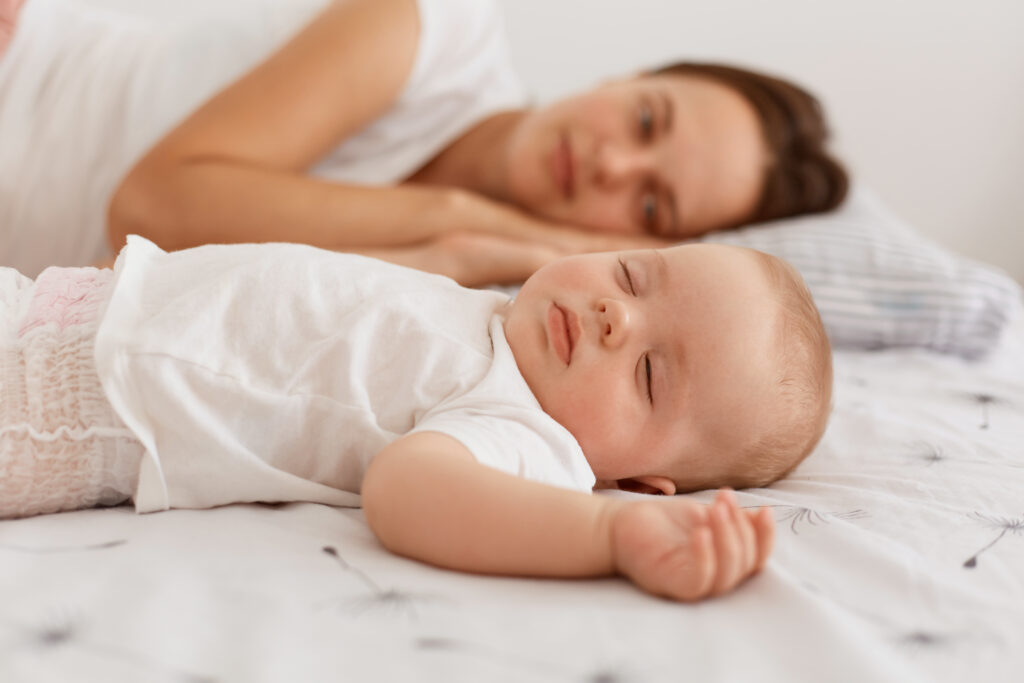

The Science of Sleep Cycles, Why the Magic 4 Routine Is the Key to Consolidated Rest
If your baby falls asleep beautifully in your arms but wakes the second they touch the crib, there is usually a reason. It is not bad luck. It is sleep biology.
So many parents describe the exact same thing. Their baby falls asleep perfectly while feeding or being rocked, but the second they are placed in the crib, their eyes pop open. Or maybe naps end like clockwork after 45 minutes. It can feel confusing and defeating. However, there is real science behind it.
Once you understand what is happening inside your baby’s brain and body, sleep becomes much easier to support. Not perfect overnight, but much easier.
The 45 Minute Mystery, Understanding Infant Sleep Cycles
Infant sleep is built differently than adult sleep. Adults usually move through cycles that last about 90 minutes. Babies, on the other hand, cycle much faster. Most infant sleep cycles last around 45 to 50 minutes.
Babies also spend much more time in active sleep, also called REM sleep. In this lighter phase, the brain is busy. Learning is happening. Development is happening. Yet because this sleep is lighter, babies are also more likely to stir between cycles.
This is where many parents get stuck. When a baby reaches the end of one cycle, they often wake just enough to scan their environment. It is a built in safety check. If they fell asleep feeding in your arms but wake in a crib, their nervous system notices that difference immediately.
If your baby wakes at 45 minutes, that is not random. It often means they are struggling to connect one sleep cycle to the next.
The Magic 4 Routine, Why It Works So Well
A bedtime routine is not just a nice ritual. It is a biological signal. Repeated steps help the brain predict what is coming next. That predictability lowers stress and supports melatonin release.
This is why I love a simple four-step routine. It is clear, repeatable, and rooted in how babies regulate.
Step 1. A warm bath
A warm bath can help the body prepare for sleep because the temperature drops afterward. That drop signals the brain that rest is coming. Research in sleep physiology has shown that body temperature shifts play an important role in sleep onset.
Step 2. Massage and pajamas
Gentle touch matters. Slow, intentional touch lowers cortisol and supports relaxation. It also helps your baby feel safe inside their body. As a mom, I have seen how much a few quiet minutes of touch can soften the entire evening.
Step 3. A full feed
The final feed of the evening should be satisfying, but ideally not the exact moment your baby drifts fully asleep. When feeding happens too close to sleep, babies can rely on that sensation to get through every cycle. Instead, we want them to enter sleep aware of where they are.
Step 4. Books or songs in the sleep space
This final step acts like an emotional bridge. A quiet book, a soft song, or a repeated phrase inside the crib room helps your baby register, “This is where I fall asleep.” That awareness matters so much at the 45 minute mark later on.
The Sleep Sanctuary Matters Too
The environment is never neutral. It either helps sleep or fights it.
- Total darkness: Even small amounts of light can interfere with melatonin production.
- Cooler room temperature: Research suggests that a room around 68 to 72°F supports better sleep quality.
- Predictability: The same room cues night after night help the nervous system settle faster.
In my opinion, this is one of the biggest missed opportunities for families. Parents often focus on the bedtime routine, but forget that the room itself is part of the routine.
Why Drowsy but Awake Still Matters
I know this phrase can feel frustrating. Still, the reason it matters is simple. If your baby experiences the last moments of falling asleep in the crib, they are much more likely to accept the crib again between sleep cycles.
That does not mean your baby must be perfectly awake every time. It means we aim for awareness. We help them notice their sleep space, not only your arms.
The Bigger Picture
Sleep is not only a biological need. It is also a learned skill. Babies need the right environment, the right rhythm, and a gentle path toward connecting their cycles.
As both a mother and a sleep consultant, I truly believe this changes everything. Once parents understand that sleep is built on safety, predictability, and biology, they stop blaming themselves. They also stop blaming their baby.
That shift is where rest begins.
About Mariana Yancik
Sleep Medicine Reviews. Bedtime routines and child sleep.
Journal of Physiological Anthropology. Thermal environment and sleep.
American Academy of Pediatrics. Sleep associations and night wakings.